5 min read
What is a Button Bit?
What is a button bit? Discover the working principle, applications, and advantages of button bits used in tunnel boring and mining projects. Contact Fate Engineering for detailed information.
Drilling equipment used in underground projects is one of the most important elements ensuring the efficient and safe progress of the excavation process. Especially in tunneling, mining, and infrastructure works, the drill bits used must be selected to suit the structure of the soil or rock formation. One of the most commonly used of these pieces of equipment is the button bit.
Button bits are drilling equipment that provides high performance, especially in hard and abrasive rock formations. Thanks to the carbide button tips on them, they create a strong cutting and breaking effect. Their durable structure and long service life allow them to offer efficient drilling performance in underground projects.
In this article, we will discuss in detail what button bits are, how they work, where they are used, and why they are preferred.
What is a Button Bit?
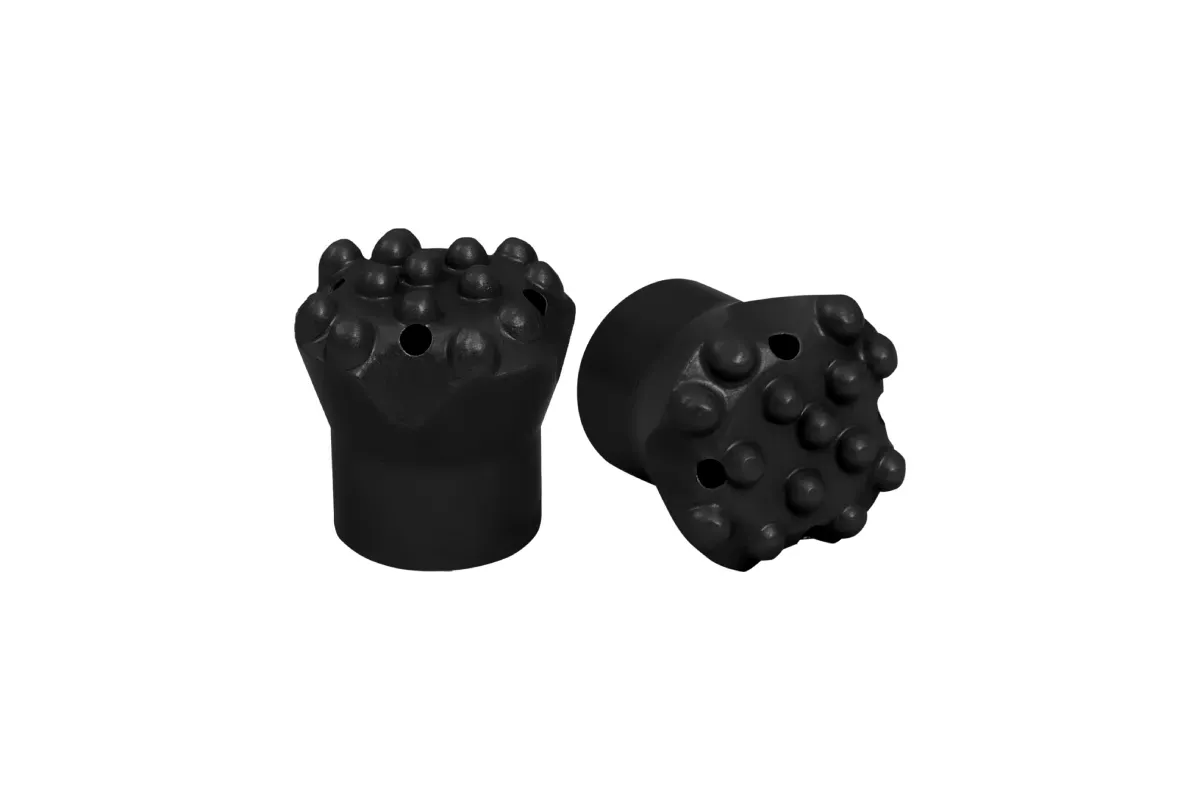
A button bit is a type of drill bit used in rock and soil drilling that has tungsten carbide button-shaped cutting tips at its end. These button tips break the rock during drilling to facilitate progress.
Thanks to the impact and rotational movement applied by the drilling machine, the button bit breaks the rock as it advances. Carbide buttons are highly resistant to wear, allowing for extended performance in hard and abrasive rocks.
The most important feature of button bits is their high strength and powerful cutting performance. This increases drilling speed and extends the lifespan of the equipment.
Button Bit Structure
Button bits consist of carbide buttons mounted on a high-strength steel body. These buttons are fixed to the bit body using special manufacturing techniques and can be used for a long time in abrasive environments.
A button bit generally consists of the following components:
- High-strength steel body
Tungsten carbide button tips
Flushing channels (air or water drainage channels)
Connection thread or shank connection
Flushing channels allow rock particles generated during drilling to be expelled from the hole. This keeps the hole clean and prevents a decrease in drilling performance.
How a Button Bit Works?
Button bits are designed to work in impact and rotary drilling systems. The impact energy applied by the drilling machine is transmitted to the rock through the carbide buttons. Simultaneously, the rotational movement allows the bit to advance along the surface.
Three basic movements occur in this process:
- Impact action breaks the rock
Rotational movement changes the cutting surface
Flushing system removes the broken pieces
Thanks to the harmonious operation of these three movements, the drilling process progresses quickly and efficiently.
Applications of Button Bits
Button bits are used in many different sectors, especially because they demonstrate high performance in hard rock formations. Thanks to their durable structure, they offer a reliable solution in challenging field conditions.
The most common areas of application include:
Tunneling Projects
In tunnel excavations, strong and durable drilling bits are needed to drill through rock formations. Button bits offer high penetration rates and long-lasting performance in these projects.
Mining Operations
In underground mining, intensive drilling operations are performed to reach ore veins. Button bits provide effective drilling performance even in hard rocks, accelerating the production process.
Quarries
Button bits are widely used for breaking up rock blocks and drilling blast holes. This allows for more controlled blasting operations.
Infrastructure and Construction Projects
Button bits also play an important role in foundation and infrastructure works in rocky areas.
Advantages of Button Bits
The main reason for the widespread use of button bits in underground projects is the performance advantages they offer. Thanks to their durable structure and strong cutting capabilities, drilling operations become more efficient.
The prominent advantages of button bits are:
- High performance in hard rock formations
Wear-resistant carbide tips
Long service life
Faster drilling progress
Lower maintenance requirements
These features shorten operation time and optimize equipment costs.
Considerations When Choosing Button Bits
Each soil and rock formation has different characteristics. Therefore, project conditions should be carefully evaluated when selecting button bits.
The following factors should be considered when making a selection:
- Rock hardness and abrasiveness
Hole diameter
Type of drilling machine used
Drilling method
Flushing system
Correct bit selection directly affects drilling performance. Using the wrong equipment can lead to both loss of efficiency and equipment wear.
Durability and Performance
The most important reason for the long lifespan of button bits is the tungsten carbide buttons used. Because this material has high hardness, it can perform for a long time even in abrasive rocks.
In addition, bits produced with high-quality manufacturing techniques transmit impact energy more efficiently, increasing drilling speed. This provides time and cost advantages, especially in large-scale projects.
Use of Button Bits in the Industry
Button bits are one of the most important drilling tools used in underground projects. These drill bits, which perform highly in hard and abrasive rock formations, can be used for a long time thanks to their durable structure.
Widely used in tunneling, mining, quarrying, and infrastructure projects, button bits make the drilling process faster, safer, and more efficient. High performance in underground projects is possible through the correct bit selection and the use of quality equipment.
The quality of equipment used is crucial for success in underground engineering projects. Therefore, the correct selection of critical drilling equipment such as button bits plays an important role in project safety and efficiency.