6 min read
What are Drilling Bits and What are They Used For?
High-quality drilling bits used in underground projects both increase operational efficiency and extend equipment life, thus providing a cost advantage.
Excavation and drilling operations in underground projects are one of the most critical stages of engineering work. Drilling operations in tunneling, mining activities, and various infrastructure projects require the use of equipment suitable for the soil structure. The quality and correct selection of equipment used in this process are of great importance in terms of both operational efficiency and occupational safety. One of the fundamental components of drilling operations is the drill bit.
Drill bits are specially designed cutting tools used to drill through rock or soil formations. Through the impact and rotational movement created by the drilling machines, the soil or rock is broken and a hole is drilled. These holes are used for tunnel excavation, blast holes, soil stabilization, or the application of various underground support systems.
The design of drill bits used in underground projects, the materials used, and the cutting tool structure directly affect drilling performance. Therefore, selecting the appropriate bit for the project plays a critical role in ensuring the safe and efficient progress of the excavation process.
What is a Drill Bit?
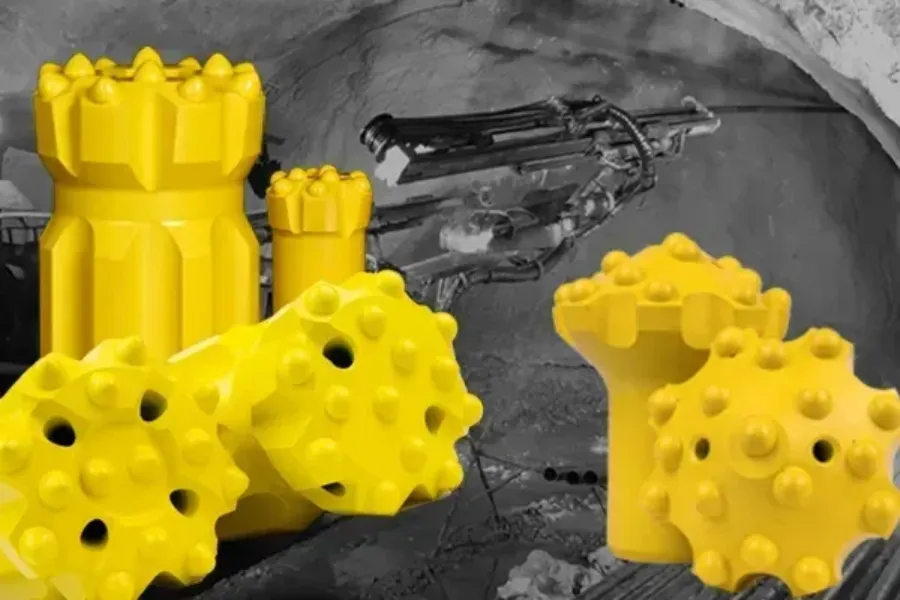
A drill bit is a cutting tool attached to the end of a drilling machine that breaks the rock or soil surface to create a hole. These pieces of equipment are specifically designed to suit different soil and rock types.
Tungsten carbide cutting inserts, typically mounted on a high-strength steel bit body, break up the rock during drilling, facilitating progress. Because tungsten carbide is a highly wear-resistant material, it can perform for extended periods in hard and abrasive rock formations.
During drilling, the bit transmits the impact energy produced by the machine to the rock, and the simultaneous rotational movement advances the drilling process. The broken rock fragments are removed from the hole with the help of air or water.
How Do Drilling Bits Work?
Drilling bits generally work in conjunction with impact and rotary drilling systems. The impact energy produced by the drilling machine is transmitted to the rock through the bit, causing fracture on the rock surface. The simultaneous rotational movement ensures that the bit continuously contacts a new surface.
Thanks to this mechanism, the drilling process occurs in a continuous progression. The cuttings produced during drilling are removed from the hole via a flushing system. This process keeps the inside of the hole clean and prevents a decrease in drilling performance.
For drill bits to function correctly, the power of the drilling machine, the bit design, and the ground conditions must be compatible. When this compatibility is achieved, the drilling process is faster and more efficient.
Applications of Drill Bits
Drill bits are one of the essential pieces of equipment used in many engineering projects. Since drilling is often the first stage in underground projects, the performance of the bits can affect the entire operation.
The most common applications of drill bits are:
Tunnel Excavation
Tunnel projects require powerful drilling equipment to drill through rock and soil formations. Drill bits play a crucial role in excavation preparation work in these projects.
Mining Operations
In the mining sector, intensive drilling operations are carried out to reach ore veins. Drill bits provide high performance even in hard rock formations, helping to accelerate the production process.
Quarries
Drill bits are used in quarries to create blasting holes. This allows rock blocks to be broken up in a controlled manner.
Infrastructure and Construction Projects
Drilling bits play a crucial role in infrastructure works in rocky areas. These pieces of equipment are frequently used in foundation excavations and ground improvement works.
The Importance of Drilling Bits in Underground Projects
Drilling operations in underground projects often constitute the first stage of the excavation process. Drilling holes with the correct diameter and direction directly affects the success of subsequent applications.
For example, holes drilled in tunnel projects are used for blasting operations, ground support systems, or stabilization applications. Therefore, it is of great importance that the drilling bits used perform at a high level.
The use of a high-quality drilling bit provides the following advantages:
- Increased drilling speed
Reduced equipment wear
Maintaining hole accuracy
Ensuring operational continuity
These factors provide significant time and cost advantages, especially in large-scale projects.
Drilling Bits in Tunnel Projects
In tunnel excavation projects, drilling bits play a crucial role in drilling through rock and soil formations. The drilling process prepares the holes necessary for opening blast holes or implementing support systems.
The bits used in tunnel projects must be strong and durable. This is because the equipment is constantly subjected to impact and abrasion during the drilling process. Therefore, it is of great importance that the materials used in the production of the bits are of high quality.
Furthermore, performing the drilling process correctly helps the excavation process proceed as planned.
Drilling Bits in Mining Operations
In the mining sector, drilling bits are used in drilling operations to reach ore veins. Underground mining galleries and production areas require intensive drilling operations.
The bits used during such operations must be durable. Equipment working in hard rock formations is subjected to high impact loads. Therefore, drilling bits must be both strong and abrasion-resistant.
Thanks to the drill bits used in mining operations:
- ore production is accelerated
drilling operations are more efficient
equipment replacement times are reduced
This significantly increases production efficiency.
Considerations When Choosing a Drill Bit
When choosing a drill bit, soil and rock characteristics must be taken into account. Each formation has different drilling characteristics. Choosing the wrong bit can reduce drilling speed and increase equipment wear.
The following factors are generally evaluated when choosing a drill bit:
- Rock hardness
- Soil abrasiveness
- Drilling machine power
- Hole diameter
- Project conditions
Accurate analysis of these factors ensures that the drilling process is carried out more efficiently.
Durability and Performance of Drill Bits
The most important factor determining the performance of drill bits is the quality of the material used. Tungsten carbide bits, thanks to their high hardness, can last for a long time even in abrasive soils.
In addition, the design of the bit directly affects its performance. The arrangement of the cutting edges determines how impact energy is transmitted to the rock. Therefore, bits designed with high-quality manufacturing techniques significantly increase drilling efficiency.
Thanks to durable drilling bits:
- Drilling time is shortened
Equipment change frequency is reduced
Operating costs are lowered
Work safety is increased
These advantages demonstrate the importance of drilling bits in underground projects.
The Role of Drilling Bits in Underground Projects
Every piece of equipment used in underground engineering projects contributes to the safe and efficient progress of the excavation process. Drilling bits are one of the most important pieces of equipment in the initial stages of this process.
Drilling bits used in tunneling, mining, and infrastructure projects enable controlled drilling of rock and soil formations. With the correct equipment use, drilling operations can be performed faster and more safely.
High-quality drilling bits used in underground projects both increase operational efficiency and provide cost advantages by extending equipment life. Therefore, drilling bits are indispensable equipment in modern underground engineering.