4 min read
Applications of 2-Channel Ring Bits
2-channel ring bits provide efficient performance in umbrella belt systems by ensuring balanced drilling and controlled injection in medium-hard soils.
In underground projects, drilling performance is a critical factor directly affecting the overall success of the system. Especially in umbrella arch applications, the quality and design of the equipment used determine both the rate of penetration and the effectiveness of ground stabilization. In this regard, 2-channel ring bits play a significant role thanks to their controlled drilling performance and balanced injection distribution.
2-channel ring bits are cutting elements that offer cost-effective solutions, particularly preferred in medium-hard and stable formations. Working in conjunction with the pipe in umbrella systems, these bits both perform the drilling operation and contribute to the injection process.
This article will detail the technical structure of 2-channel ring bits, the projects in which they are used, and why they are preferred.
What is a 2-Channel Ring Bit?
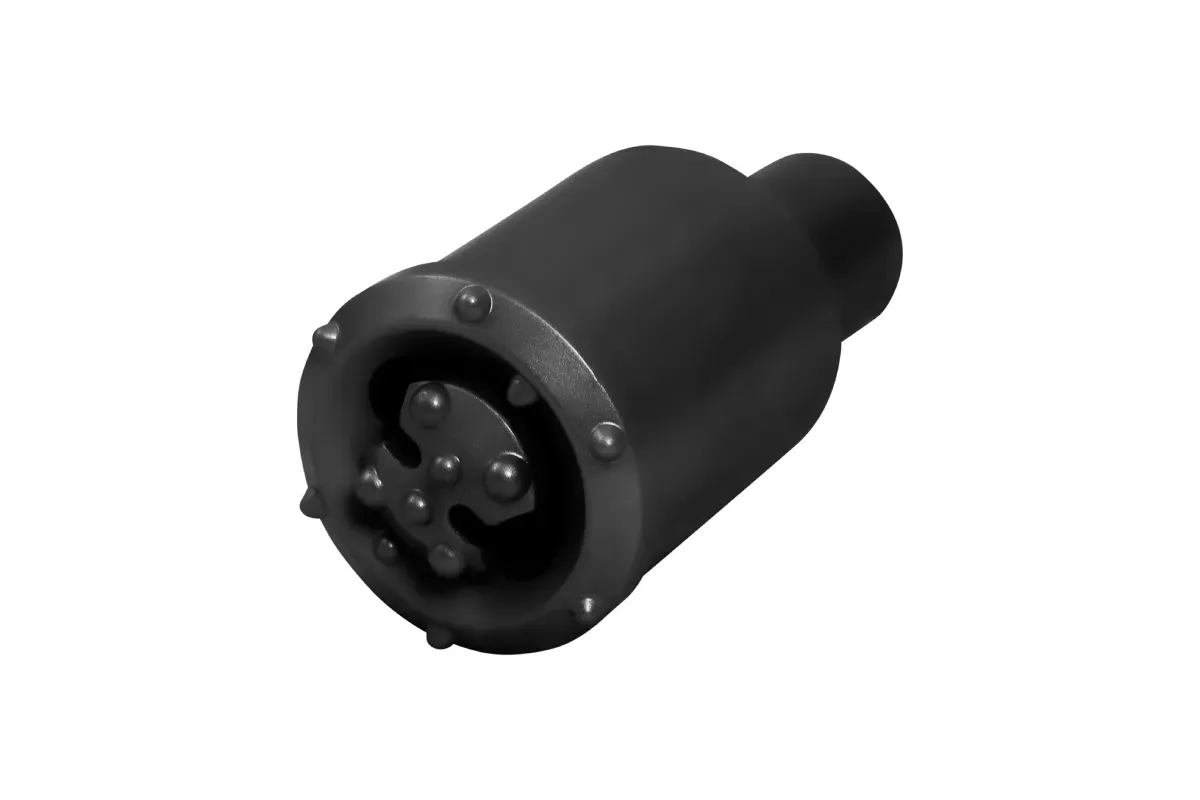
A 2-channel ring bit is a special drilling bit used in umbrella arch systems and designed to match the outer diameter of the umbrella pipe. The term "ring" comes from its ring-shaped operation around the pipe. This structure allows for both drilling and the creation of a suitable gap for pipe penetration.
The two-channel design ensures controlled material evacuation and injection flow during drilling. Having two channels provides stable performance, especially in stable soils.
The main purpose of this design is:
- To cut the soil
To create a hole diameter suitable for the pipe
To direct the injection flow
To minimize vibration during drilling
Role in Umbrella Arch Systems
In umbrella arch applications, drilling is not just a process of creating a cavity. The accuracy, diameter, and stability of the drilled hole directly affect the load-bearing capacity of the system. 2-channel ring bits offer controlled and stable cutting performance at this stage.
They are particularly preferred in:
- Medium-hard soils
Forms without excessive water pressure
Soils with a stable granulometric structure
Areas with low stability risk but requiring support
In such soils, aggressive 3-channel designs may be unnecessary. A 2-channel ring bit offers sufficient cutting power while optimizing cost and energy consumption.
Performance in Medium-Hard Soils
Not every soil requires a highly aggressive cutting design. In medium-hard formations, a more controlled cutting structure is preferred. 2-channel ring bits offer a balanced solution in this regard.
These soil types are generally:
- Compacted sand
Gravel mixed soil
Lightly weathered rock
Clay-silty formations
In these types of soils, an overly aggressive cutting design can lead to unnecessary vibration and energy loss. The 2-channel structure, however, maintains drilling stability and makes pipe advancement more controlled.
Use in Urban Tunnel Projects
Vibration control during drilling is of great importance in urban projects. Surface structures, infrastructure lines, and existing systems can be affected by ground movements.
Thanks to their more balanced cutting geometry, 2-channel ring bits:
- Produce lower vibration
Provide controlled advancement
Minimize soil loosening
Therefore, they are frequently preferred in metro tunnels, infrastructure crossings, and areas requiring controlled excavation.
Cost and Efficiency Balance
In underground projects, equipment selection is not only a technical but also an economic decision. 2-channel ring bits offer a more balanced solution compared to high-cost alternatives, especially in projects of moderate difficulty.
Their advantages can be summarized as follows:
- Lower production costs
Less energy consumption
Controlled wear rate
Long service life
These features help optimize the total drilling cost.
Wear Resistance and Durability
The performance of 2-channel ring bits depends not only on their design but also on the quality of the materials used. High-strength steel bodies and carbide inserts offer long-term use even on abrasive surfaces.
High wear resistance:
- Maintains hole diameter
Facilitates pipe advancement
Reduces frequent bit changes
Minimizes operational downtime
This means continuous production on site.
The Difference Between 2-Channel and 3-Channel Ring Bits
Understanding the difference is essential for selecting the right equipment for your project. 2-channel ring bits offer more balanced and controlled drilling performance, while 3-channel designs provide more aggressive cutting.
In general:
2-channel design → Medium ground, balanced progression
3-channel design → Loose or water-saturated ground, high injection requirement
Therefore, equipment selection should be based on ground analysis.
The Role of 2-Channel Ring Bits
2-channel ring bits are essential components in umbrella belt drilling systems, providing controlled drilling and balanced injection performance. They offer an optimal solution in terms of cost and performance, especially in medium-hard and relatively stable soils.
When selected with proper soil analysis, 2-channel ring bits make the drilling process more efficient, reduce equipment wear, and improve injection quality. If safe and economical progress is the goal in underground projects, choosing a correctly designed 2-channel ring bit is a crucial engineering decision.